The Ethics of “Frankenstein” in AP Lit
October 17, 2024 2024-10-18 9:19The Ethics of “Frankenstein” in AP Lit
By: Zayden Orenstein and Kaelyn Fu…
October is the month of celebrating Halloween, autumn, pumpkins scary movies, and more. So, for students in AP Literature and Composition, a fourth-year ELA class, what novel could be more perfect to read than Frankenstein?
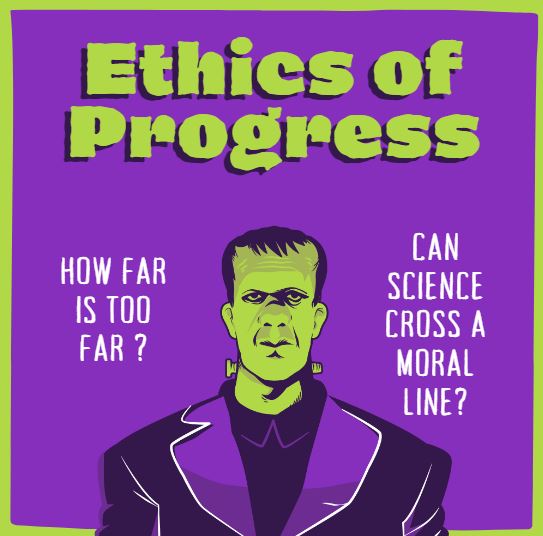
Published in 1811 by Mary Shelley, Frankenstein is a novel about the scientist Victor Frankenstein’s decision to bring the humanoid assemblage of corpses’ body parts to life. Frankenstein explores how Victor’s decisions affected himself, his family, his community, and his creation itself, and calls into question the morality of scientific advancements – when does human progress go too far?
To dive deeper into this question, students have been placed into research groups to choose and discuss a specific modern scientific advancement. Advancements studied include Neuralink, head transplants, assisted suicide, and more. As the first phase of the project, groups collected 10 pros and 10 cons about their selected topic. Next, they will make a presentation arguing whether or not their advancement crosses the moral line and discuss how this advancement relates to the themes and ideas in Frankenstein. Students from other groups will then pose open-ended oral defense questions for each presentation.