
Device Repairs: Who “Should” Be Fixing Your Tech?
October 3, 2025 2025-10-03 10:43Device Repairs: Who “Should” Be Fixing Your Tech?
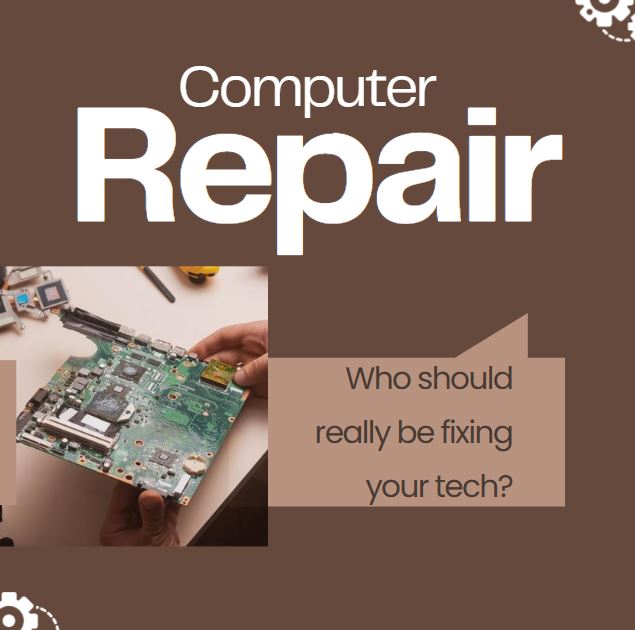
By: Daniel Manetin
In an era where sustainability and cost-effectiveness seem the top priorities, third-party hardware repair services have soared in popularity. As many are already familiar with, as the productivity, efficiency, and abilities of technology rise, so does their price tag; a price that many just can’t pay every time a new phone or laptop rolls out. Of course, this means that many choose to stick with their current devices, whether they are 5 years or 5 months old, but those that own devices long since abandoned by their producers, a new struggle quickly becomes apparent.
Put bluntly, wear and tear is unavoidable. Whether it’s a scuffed screen, broken port, or puffed battery, devices are prone to mistreatment or malfunction, regardless of how tenderly they’re cared for. No material that is anywhere near affordable is designed to last forever, and objects of glass, metal, and plastic are no exception. The only real solution is replacement, either of the whole device or just the broken parts; as is quite clear, most people tend to side with the latter option to avoid dents in their wallets.
But, of course, manufacturers know this, so they provide their own professional repair services as a comfortable net for if your iPhone or Pixel gets unexpectedly tackled by a heavy object of unknown origin. These services, backed by official technicians and spare parts taken directly from the factory, provide a quick and clean way to get your tech fixed. However, one area they don’t particularly shine in is affordability, which is where third-party services step in.
Third-party repair shops offer that lifeline for users who want to extend the life of their devices without suffering the steep costs of manufacturer services. These independent shops can source replacement parts from various suppliers and can also provide labor at a fraction of the cost. Alex Sarkisian of Network Express Computer Services, an expert repair technician of over 20 years, stated that “For example, a typical screen repair on a Mac Air or MacBook can get repaired for $200. If you take it to an Apple repair shop, they’ll probably double the price.” In the vast majority of cases, having a replacement done on a device part by the manufacturer will result in a massively inflated price, while a licensed technician with an identical skillset can get the same work done with the same quality, while charging you a fraction of the cost.
Yet, despite the clear benefits for consumers, third-party repair services often face significant obstacles, not from their customers, but from their competitors. “Back in the old days when you bought equipment, you’d have the schematic either printed on the back or in the manual,” Alex mentioned. “These days, they don’t supply that. They don’t want you to have a schematic. They don’t want you to repair it.” Even though companies might advertise balanced prices and materials for device longevity, in the long run, they want the device to break. “Once it fails, then you’ll go buy another one. It’s even more money, so that’s why they’re doing it.”
This fight between small businesses and corporations hasn’t gone unnoticed, and it has sparked and consistently fueled the Right to Repair movement. This global protest seeks to ensure that consumers and independent technicians have both the information and resources they need to maintain and fix their own devices, and advocates argue that being able to extend the life of their own devices is both a matter of consumer rights and environmental waste prevention. After all, the person who purchases a phone should be able to care for it without having to suffer from an overpriced crutch; it’s a basic privilege that most other purchases provide.
However, just like most global movements, they have sparked changes through their motives. Some tech giants, such as Apple, Samsung, and Google, have begun to make slow, incremental changes with their device repair policies, like allowing certain aftermarket parts to function with official devices, or even allowing the purchase of official parts by third-party technicians. Unfortunately, even with these small wins, the road remains uncertain with how lenient these companies will willingly go, if any more at all.
In the end, this constant fight over third-party repairs begs the question of who truly owns the devices consumers purchase. Manufacturers may argue that their restrictions preserve quality and security, but the reality is that many people would rather concern themselves with affordability and electronic waste. Independent repair shops and the Right to Repair movement stand as counterweights to this perspective, reminding consumers that sustainability and affordability should go together with ownership of a device. Until greater reforms take a stand, this battle will continue, leaving consumers to decide whether to play by the manufacturers’ rules, or to support those who believe that being able to fix what you already own should be a requirement, not a privilege.