
The Burnout Battle
November 21, 2025 2025-11-29 3:09The Burnout Battle
By Poorvi Roopesh
“I was so ahead of the curve, the curve became a sphere” (Taylor Swift)
We’ve all heard the phrase, “Nobody’s perfect.” Yet recent surveys show that 33% of kids aged 10 to 18 believe they need to be perfect, and that pressure is pushing many teens towards burnout. Today’s students juggle far more than homework.(Alaimo, 2024) Between tests, jobs, extracurricular activities, internships, and family responsibilities, teens are overloaded.

Pradeepa Praveenkumar (11) “Burnout is very real and students should balance their schedules so they don’t compromise their grades.”
Burnout is a slow killer of creativity, joy, ambition, and perseverance. It builds gradually under the pressure to stand out in an already competitive race for the best possible future. One study found that 81% of teens feel pressure about grades, appearance, friendships, and staying informed. Adults often say, “Take breaks” or “Don’t stress,” but students keep pushing to the breaking point out of fear of falling behind. Many teens spend their last years of childhood stuck inside, studying for finals, SATs, ACTs, and completing research projects. They give up passions and hobbies in exchange for the perfect college application or job. Sammy Cerros (11) ” Students who are burnt-out feel less inclined to focus on hobbies because they are too busy with school.”

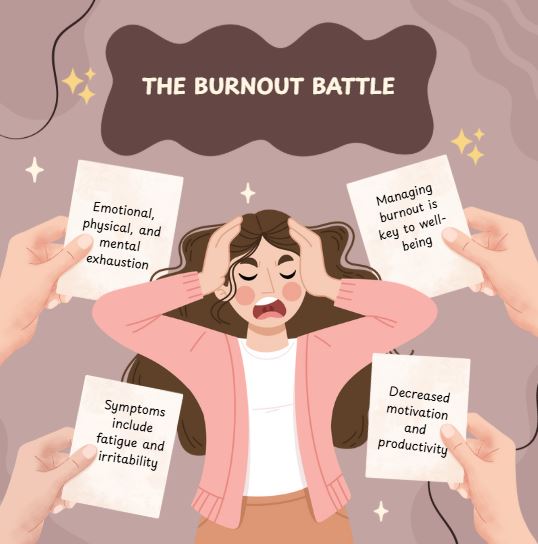
Burnout is more than feeling tired. It is a deep emotional, physical, and mental exhaustion that makes life feel overwhelming. Ambitious students often lose the energy to finish assignments by the end of a semester. What makes burnout especially tricky is that many students don’t even notice they’re slipping into it until the water is already above their head. Advice like “work harder” can backfire, tying self-worth to grades and achievements, which psychologists warn can lead to anxiety, and long-term mental health struggles.
There are ways the adults of the future can prevent burning out. One solution is helping teens feel valued simply for who they are. Reminding teens that emotional well-being matters more than a number on a report card makes them more resilient. Instead of blaming teachers for too much work or students for poor time management, both sides should listen to feedback and work towards balance. Encouraging breaks and celebrating effort over perfection can make a real difference.
toto togel link gacor bento4d slot gacor hari ini