
Raising Voices, Shaking Systems: How Youth Change the World
October 31, 2025 2025-12-16 23:12Raising Voices, Shaking Systems: How Youth Change the World

By Siddarth Suresh
For as long as humanity can remember, the youth have always sought to speak up and make their voices heard. In ancient Greece, young philosophers like Socrates questioned authority and challenged the norms of their society, even at great personal risk (Ambury, 2025). Similarly, in the early 20th century, the Young Turks, a movement led largely by young people, overthrew the Ottoman Empire to push for a more democratic society (Zeidan, 2023). Their actions showed that even centuries ago, young people were willing to take bold steps to create a fairer and more just world.
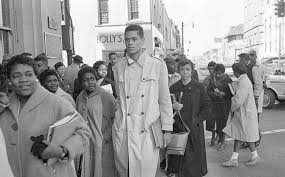
Youth protest continued to shape history in the 1960s. Across the United States, students and young people filled the streets to fight for civil rights and oppose the Vietnam War. Sit-ins at segregated lunch counters and marches in major cities drew attention to systemic inequality and demanded change (Library Of Congress, 2015). These actions forced governments and communities to confront injustice and inspired generations to believe that they too could make a difference. Innovation Academy student Alivia Green (10) commented, “It’s really inspiring to see how people our age were able to make a difference and bring change to our world.”
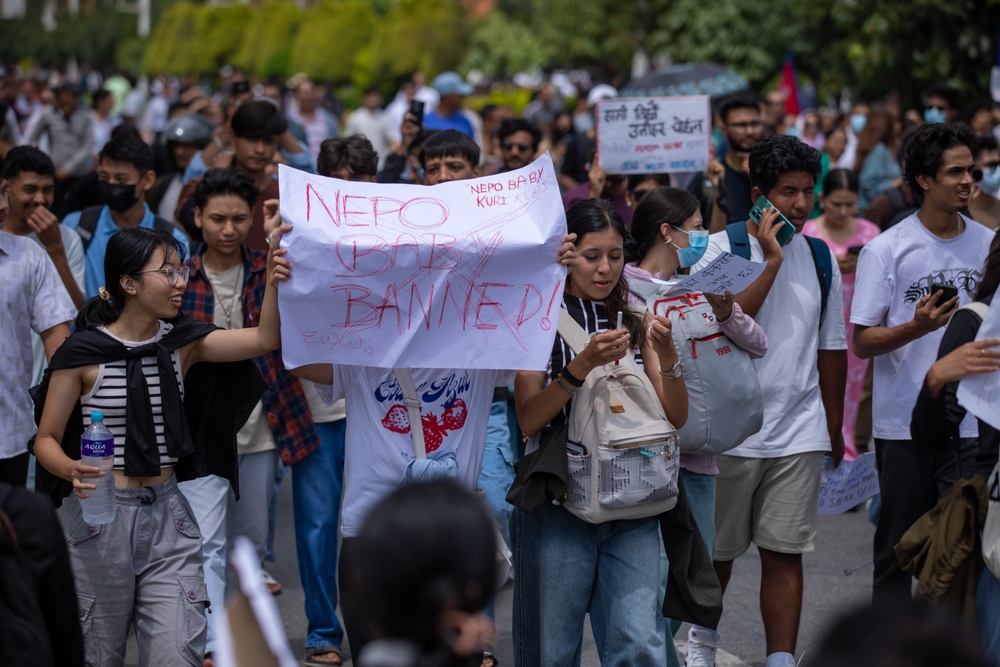
Today, youth activism continues to transform societies. In Nepal, young people played a crucial role in exposing government corruption and demanding political accountability. In 2025, student groups and youth organizations organized protests against mismanaged public funds and opaque government practices (Beech & Loke, 2025). Their demonstrations pressured officials to reform local governance structures and increase transparency, leading to the resignation of several corrupt leaders and reforms in how public projects are monitored. The youth movement in Nepal also encouraged broader civic engagement, showing that younger generations could shape the future of their country. Innovation Academy staff member Ms. Taha said, “In today’s world, corruption and injustice are so rampant, so it’s inspiring to see how the youth of today are addressing these issues head-on.” Around the same time, young people in other countries were also taking a stand, from climate protests in Europe to student marches in Africa, proving that the drive for justice expands beyond man-made borders.
History shows that youth protest has always been a powerful force. From ancient revolutions to modern movements, young people have consistently challenged injustice and demanded fairness. Their courage and determination remind us that societal change is possible when the voices of the next generation are given room to shine. By continuing to act with conviction and solidarity, young people demonstrate that lasting progress comes not from silence, but from engagement.
Sources:
Ambury, J. (2025). Socrates. Internet Encyclopedia of Philosophy. https://iep.utm.edu/socrates/
Beech, H., & Loke, A. (2025, October 8). How Nepal’s Gen Z Revolution Spiraled Out of Control. The New York Times. https://www.nytimes.com/2025/10/08/world/asia/nepal-gen-z-revolution.html
Library Of Congress. (2015). Youth in the Civil Rights Movement | Articles and Essays | Civil Rights History Project | Digital Collections | Library of Congress. The Library of Congress. https://www.loc.gov/collections/civil-rights-history-project/articles-and-essays/youth-in-the-civil-rights-movement/
Zeidan, A. (2023, November 2). Young Turks | History, Significance, & Facts. Encyclopedia Britannica. https://www.britannica.com/topic/Young-Turks-Turkish-nationalist-movement
situs toto bento4d