
Two Weeks Until AP Exams! Here’s what you need to remember.
April 16, 2026 2026-04-27 0:55Two Weeks Until AP Exams! Here’s what you need to remember.
By Srishti Sawant
For many students, AP exams are still “a month away”, something to worry about later. For others, this timeframe feels like nowhere near enough time. And for many students, the AP exam grind depends entirely on the class, the teacher, and how prepared they already feel. With only two weeks left, AP exam season doesn’t look the same for everyone. However, irrespective of mindset, grade level, or course rigor, the main difference often comes down to how the time left until the exam is used.
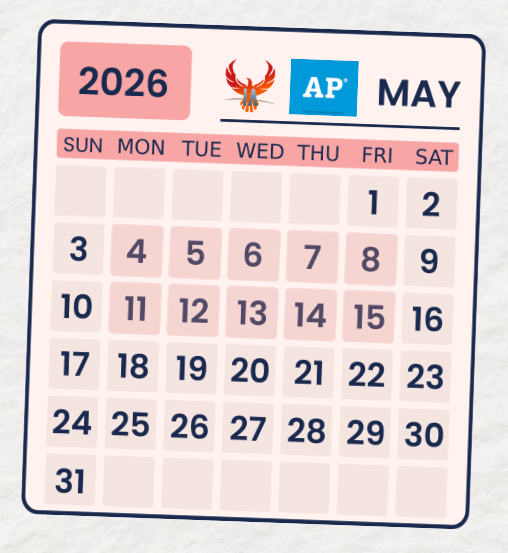
Image 1. AP Exam Dates. Image created by S. Sawant.
AP First Timers (9th and 10th Graders)
For many freshmen and sophomores, the jump from middle school to college-level courses can feel particularly overwhelming. However, it is always possible to still get your goal score on the AP exam! One of the biggest misconceptions at this stage is assuming that a month is more than enough time without changing how you study. Unlike traditional tests, AP exams require not just memorization, but application, endurance, and familiarity with question styles.
For students new to APs, this final two weeks are less about solely relearning everything and more about reinforcing what you already know through active practice to increase exam format familiarity. Shifting from passive review (e.g., rereading notes) to actively applying concepts through practice questions can make a major difference in exam outcomes.
As current AP Psychology student Kaelyn Jin-Britt [12] says,
“Make sure you give yourself enough time to prepare and be as confident as possible for the exam!”
Building that confidence now, through consistent and intentional review, can set a strong foundation not just for this exam, but for future AP courses as well.
The Heavy AP Load (Typically Juniors)
For many juniors, a month can feel like not nearly enough time. With multiple AP classes, extracurriculars, and increasing academic pressure, preparing for several exams at once can quickly become overwhelming.
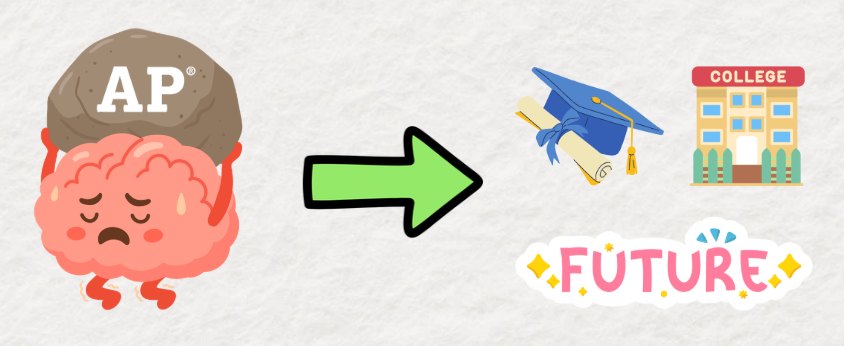
Image 2. High Stress and AP Load Due to Pressure for Future Goals. Image created by S. Sawant.
Tanvi Nalam [11], like many juniors across the world, has taken a heavy load of APs. Given her experience studying for APs in the past and present, Nalam [11] notes that many students who are new to APs attempt studying for the exam like a normal test, overlooking one of the main differences between traditional tests and the AP exam: the fact that the AP exam is graded on a 5-point scale as opposed to the traditional 100-point scale. Instead, Nalam [11] advises students to
“Study for the exam after looking over the average AP score thresholds.”
These thresholds are unofficial, however they can typically be found online from sources that have analyzed past AP exams extensively in the given content area. Nalam’s advice helps lighten the mental weight of the college-level exam through the realization that getting the highest score on the AP exam (5) doesn’t mean you have to score a 100%. For example, AP Chemistry students typically require a 72% or above on the exam to achieve a 5 on the exam; in contrast, AP Computer Science Principles students typically must score a 90% or above to score a 5 on the exam.
On the AP Exam, you may notice that content from certain units shows up more than others. CollegeBoard actually provides percent estimates of the amount that certain units that will appear on the AP exam on its Course At A Glance pdfs; these can be found by searching up your specific AP Exam’s course at a glance (sample search entry: “AP Physics 1 at a glance”). Focusing on topics that will be weighed heavily on the exam is a big step on the road to a 5.
Now, most students who are taking many APs have to worry about not only the AP exam that is in two weeks, but also the assessments occurring concurrently in those rigorous college-level classes; this leaves little time for focused AP prep. Mariam Hussain [12], a senior who has now taken 13 AP courses, explains that despite having little time to direct towards AP exam preparation during the school week, she would make sure to direct time on slower school days towards exam prep. During these focus sessions, Hussain [12] would
“Prioritize truly understanding core concepts as opposed to idly memorizing and forgetting content within a few days of learning.”
Remember to keep in mind that perspective is critical when studying for standardized tests within a short time period. When time may feel limited, strategy matters more than intensity. The best strategy with a heavy AP load is understanding which exams may need more attention and which specific units may require more focused attention based off of both prior knowledge and the specific AP exam weightage.
Seniors
For seniors, a month can feel almost irrelevant. With most college decisions finalized and graduation approaching, it’s easy to mentally check out of AP exams altogether. However, it is important to remember that AP exams can still carry real value in the form of college credits, placement, and future flexibility.
As Many Mock Exams As Possible!
Across all grade levels, one strategy consistently stands out in the exam grind: practice. Taking full-length or even just partial mock exams helps build familiarity with timing, question styles, and endurance. It also reveals gaps in understanding that simple note review often misses. Especially in these last few weeks, this kind of active preparation can make a significant difference.
Keep In Mind
With less than a month left, AP exams may feel either distant or overwhelming depending on where you stand. But whether it’s your first AP course or your last, the next few weeks still matter more than they might seem.
Additional Information
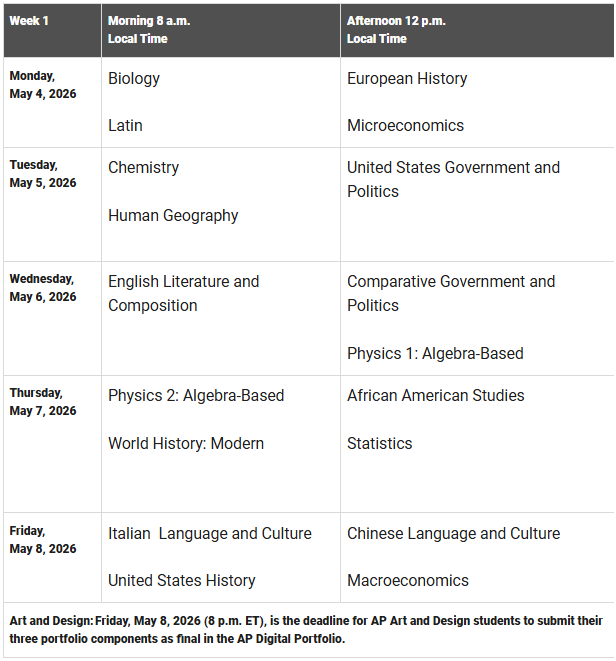
AP Exam Schedule Week 1
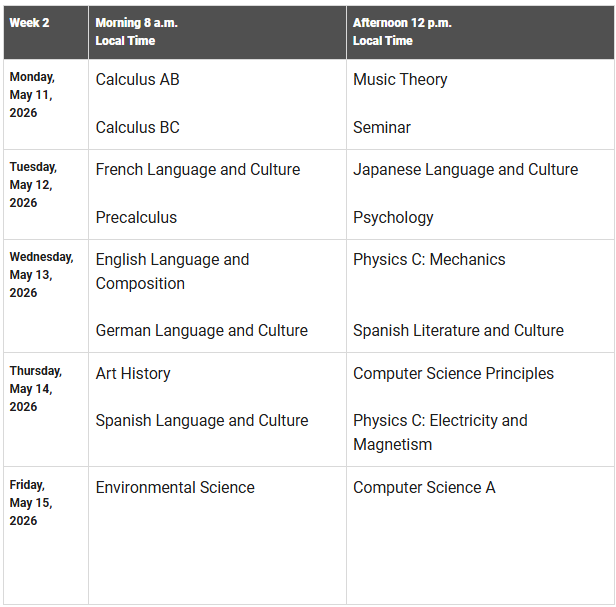
AP Exam Schedule Week 2
(Final Week)
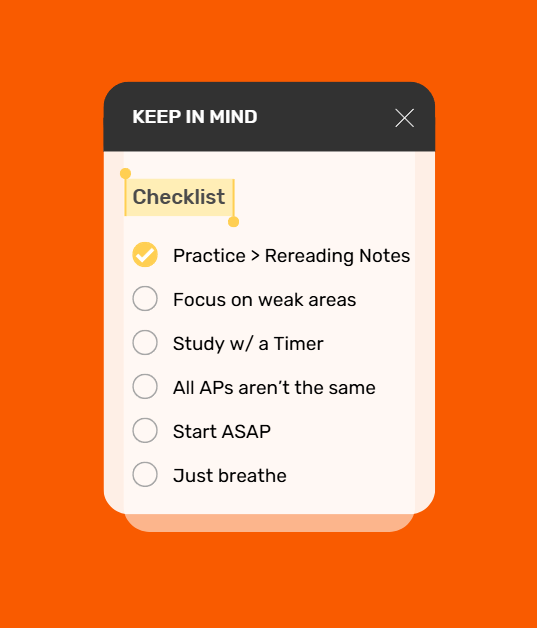
Image 3. Notes To Keep In Mind During AP Exam Prep. Image created by S. Sawant.
Image 4. and Image 5. Courtesy of CollegeBoard.
slot gacor hari ini slot gacor hari ini slot gacor hari ini