AI Is Here to Stay, But Should It?
January 30, 2026 2026-01-30 14:02AI Is Here to Stay, But Should It?
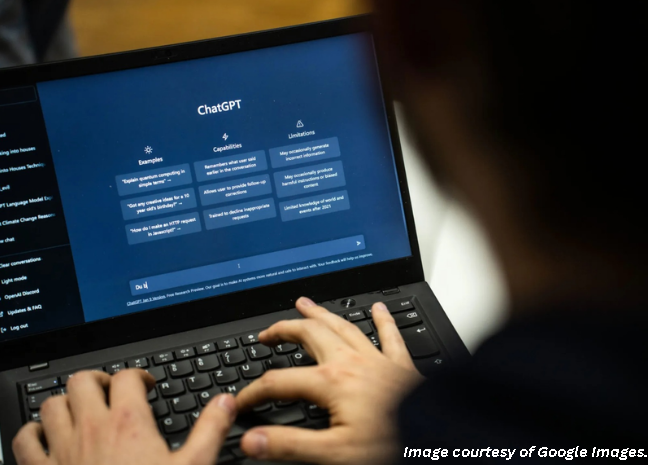
As the new year starts to set in, one of the most notable factors of the previous year refuses to let up; generative AI is becoming increasingly more involved in daily activities. However, U.S. high schools are pushing back, and students have been especially noticing this from the strict reprimands handed to those who are found using it to complete their work. AI continues to evolve in each aspect, and even though rules are established to strongly discourage its use, there are benefits, such as streamlined research and programming. While this seems like a win-win for students and educators alike, a study by Pew Research Center notes that “A quarter of public K-12 teachers say using AI tools in K-12 education does more harm than good,” with only 6% arguing it does more good than harm. The decision is tied between the use of AI as a tool for efficiency and a tool for exploitation.
For many teachers, spotting AI usage has become easier in recent years, and Cybersecurity teacher Tyler Ross explained that sudden changes in a student’s workstyle will raise obvious red flags. “You kind of know what kind of work a teenager produces,” he said, referring to students who suddenly submit work far beyond their usual skill level. “You’ll read something they wrote in class, like a short describe-yourself assignment, and then all of a sudden the next paper they turn in is this college-level, professional, amazing essay… But that’s definitely AI.” In technical classes this issue can be especially prevalent when students submit what they claim is their own work, and then cannot explain how it functions.
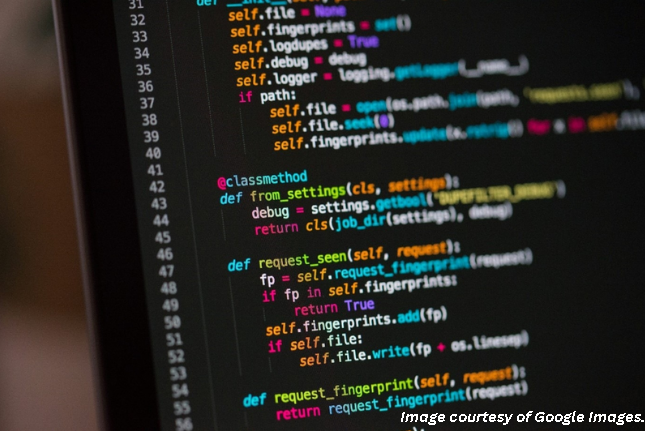
Mr. Ross pointed to coding assignments as a clear example of this usage; “You make this beautiful, amazing piece of code. It doesn’t work… And I was like, ‘Well, what is the error?’ And they can’t tell me what it is. How’d you make the code? If you made it, then you should be able to fix it.” Still, he made it clear that AI use has evolved over recent years, mentioning that “in the beginning it was all negative because… people were just using it to cheat.” Now, though, more productive usage is being seen in class, claiming “now what I’m seeing is more of a shift of people using it more as a tool… Learn [the content], use the AI as an example that you can follow along with… Like a tutor.” As models have advanced, so have the users of the models themselves; cheating is seeing less success and prominence, and students are using AI as the intended “tutor” to help streamline the common day and make work less tedious.
A different perspective came from Virtual Learning Facilitator Bev Shiotelis, who sees AI most often used for communication between students and virtual course instructors rather than assignments. “We actually encourage it in emails,” she added, explaining how “it helps make them polished and concise. I think it’s helped the students be more polite and communicate better and facilitates better relationships with their teachers.” While Ms. Shiotelis acknowledged the risk of misuse in assignments, she did add that using AI still requires effort and critical thinking. “The keywords matter,” and students must think carefully about both when and how they choose to use AI to get useful results that don’t result in a reprimand.
Regardless of whether or not the world wants it, artificial intelligence will remain a prominent display of the good and the bad. Teachers are ever aware of the risks of cheating and overreliance, but many see the potential in responsible use; students are commonly assumed to use dishonestly submit AI-generated work as their own, but many insist on using it productively to keep their work as their own, but make the process quicker. Generative AI is both a marvel of modern technology and a shining example of a double-edged sword, and it’s up to both the users and the reviewers to determine how to wield it.
Works Cited
Beshay. (2024, May 15). A quarter of U.S. teachers say AI tools do more harm than good in K-12 education. Pew Research Center. https://www.pewresearch.org/short-reads/2024/05/15/a-quarter-of-u-s-teachers-say-ai-tools-do-more-harm-than-good-in-k-12-education