
The Cost of Bias in News Reporting
March 6, 2026 2026-03-06 12:01The Cost of Bias in News Reporting
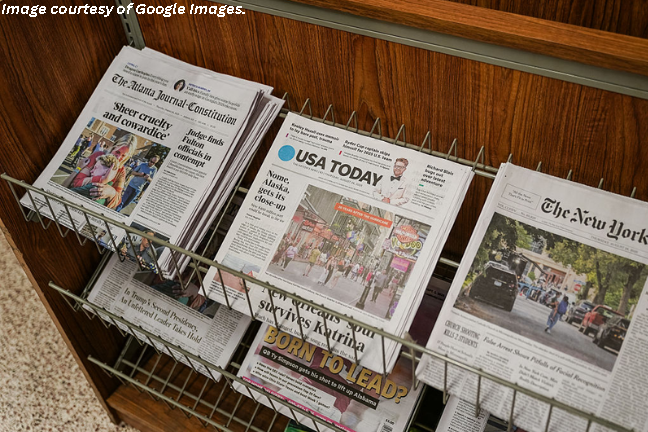
In the modern day, political media reports not just the conflicts and crises seen online, but it also shapes exactly how people interpret them. The same event with the same outcome could have vastly different portrayals depending on what channel you tune into, and in the age of social media and streaming services, countless perspectives are accessible with ease. Additionally, as companies stray toward retention rather than factual reliability, it’s common to see many of these perspectives laced with lies or twisted facts, designed not to inform, but to appeal to a particular mindset. Letting this deceit take hold in the mind not only nullifies the point of news, but also stirs conflict in groups of opposing views; it’s human biology to accept lies before instead of questioning them, and politics are no exception.
As the intended use of global news, the informational problem begins when interpretation replaces actual source material, and as Mr. Scott Robinson of the Research department explained, “One of the biggest things in research is what we call primary literature… it really is not influenced by opinion. But primary research [is] taken by media or commentators, and they draw opinion from that primary research.” The bias does not enter the data until after it is collected, and sources draw on it in their own perspectives, letting opinions take place within the facts. The best way to combat this is to “go back to the source, go back to the primary literature of where the information’s drawn from, and see if… that gives you the same bias.” Although this method tends to weed out potential bias and push through to the data, other influences can sometimes affect even the base data; Mr. Robinson warned that in the case of funding sources, “you [should] follow the money to see if there is any influence or bias… Follow the data down to the primary research… and follow the money.”
In the field of politics, where bias is ever-prevalent, the shift of bias is much more structural. Political media was once focused on purely shared facts, but as media progressed, that motive has shattered. As stated by AP Government teacher Mr. James Campbell, “We’re now getting news that in many cases is intentionally catering toward one political… audience or another.” As the Internet and digital platforms came around, this mindset changed even further, along the lines of “‘We’ve seen what you clicked on… We know what you like. Here it is.’ It’s gotten less information and more just entertainment.” Just as with recent AI models, modern algorithms are shaped to feed users content they already agree with to reinforce beliefs and maintaining engagement instead of maintaining honesty. This is especially true with social media where attention is the primary goal, threatening traditional politicians with the tactics of possible deceit through non-verified sources. Mr. Campbell suggested to “Get your news from multiple places. Double check your news, especially if you agree with it… Without that, we are going to be more polarized… voters of different political ideologies are not going to be able to find common ground with each other.”
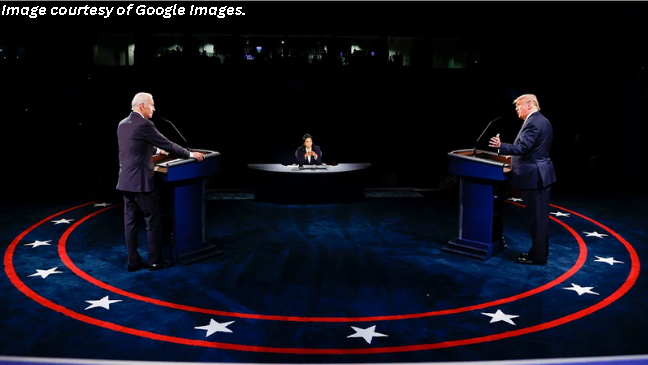
News is what makes the world go around in synchrony, keeping everyone up to speed instead of letting communities fall into oblivion, but the danger in it is not just the lies we are presented.
“The real danger is that if we hear enough lies, then we no longer recognize the truth at all. What can we do then? What else is left but to abandon even the hope of truth and content ourselves instead with stories?” (“1:23:45”).
Works Cited
“1:23:45.” Chernobyl, written by Craig Mazin, directed by Johan Renck, Home Box Office, 2019.