The Road to Academic Integrity with AI
March 13, 2026 2026-03-14 9:01The Road to Academic Integrity with AI
By Daniel Manetin
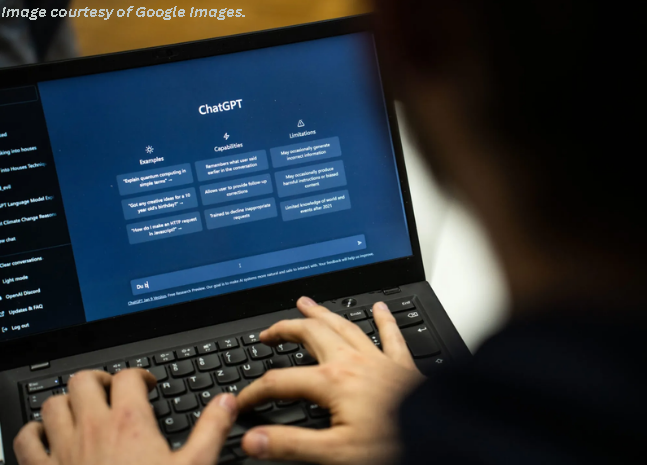
Artificial intelligence has not just been changing workforces and business systems, but has also been spreading like wildfire in academics, becoming one of the most debated points in the subject. Generative AI’s easy-to-access convenience has had radical impacts on scoring systems as detecting legitimacy has become a challenge rather than a question, and academic integrity is relying on the right choices to be made on policies and systems surrounding the modern tool. However, in this process must be a line in which use cases are considered either acceptable or dishonest, and surprisingly, this line seems to be a need for both students and teachers alike.
Students are the primary target for AI use accusations, but in reality, intentions tend not to lean into dishonesty, rather as a support tool instead of a replacement. Student Bryce Baysden [11] stated that “I don’t think it’s good to AI your whole assignment and spend five minutes on it,” noting that generating entire works as your own is not appropriate whatsoever. However, he believes that the tool can and should be used as a guideline for tasks such as research and ideating, noting that “…you’d want to use it to outline or fix grammar issues or use it to brainstorm instead.” While some students still use AI work to claim as their own, many still retain the responsibility to use it productively and learn more efficiently.
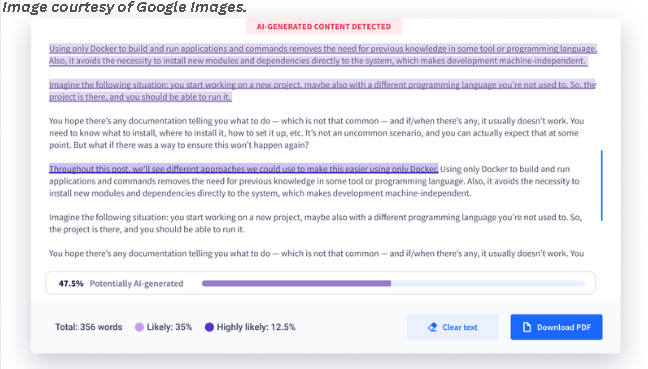
However, from a teacher’s perspective, the expectations around AI use conform to the possibility of use, not the use itself, as generated work is often indistinguishable from human-made work to the naked eye. Therefore, knowing its use generally cannot be avoided, teachers and education systems are creating rulesets to define clear limits on AI use, instead of banning it entirely. English teacher and college professor Dr. Randy Gingrich explained that “the expectation is that students on a honor code will not be using AI,” and that although using AI for feedback or brainstorming can be appropriate, “[students] would have to write up their papers entirely on their own.” Additionally, beyond the honor code, misconduct still exists. Teachers often rely on multiple tools rather than a single detector due to this, and as Dr. Gingrich noted, “one system’s not that accurate… you usually have to do three or four to be sure.”
The shifting in opinions on generative AI usage could be portrayed as simple contrasts between educator and educated, but in reality it is a portrayal of the challenges that come with keeping a concrete system up-to-date with a rapidly evolving breakthrough. It raises both ethical and legitimacy concerns, and although they can be clashing, they can also provide genuine insights on issues and suggestions about responsible AI use. While the future of this debate is unpredictable, it is certain that an easy and equally fair solution will not come anytime soon, and until then, the use of artificial intelligence by both teachers and students will have to continue evolving alongside the technology itself until integrity and equality can be guaranteed.
toto hk toto sydney toto hk