
The Worth of Generative AI: A Tool or a Tradeoff?
March 26, 2026 2026-03-27 10:52The Worth of Generative AI: A Tool or a Tradeoff?
By Siddarth Suresh
Generative AI has quickly become part of everyday life for students, showing up in classrooms, homework, and even creative projects. Tools that can write essays and explain concepts feel almost like having a personal tutor available at any time. For many high school students, especially those at Innovation Academy, this technology is exciting but also a little unsettling. As its influence grows, the question becomes harder to ignore: is generative AI truly worth it?
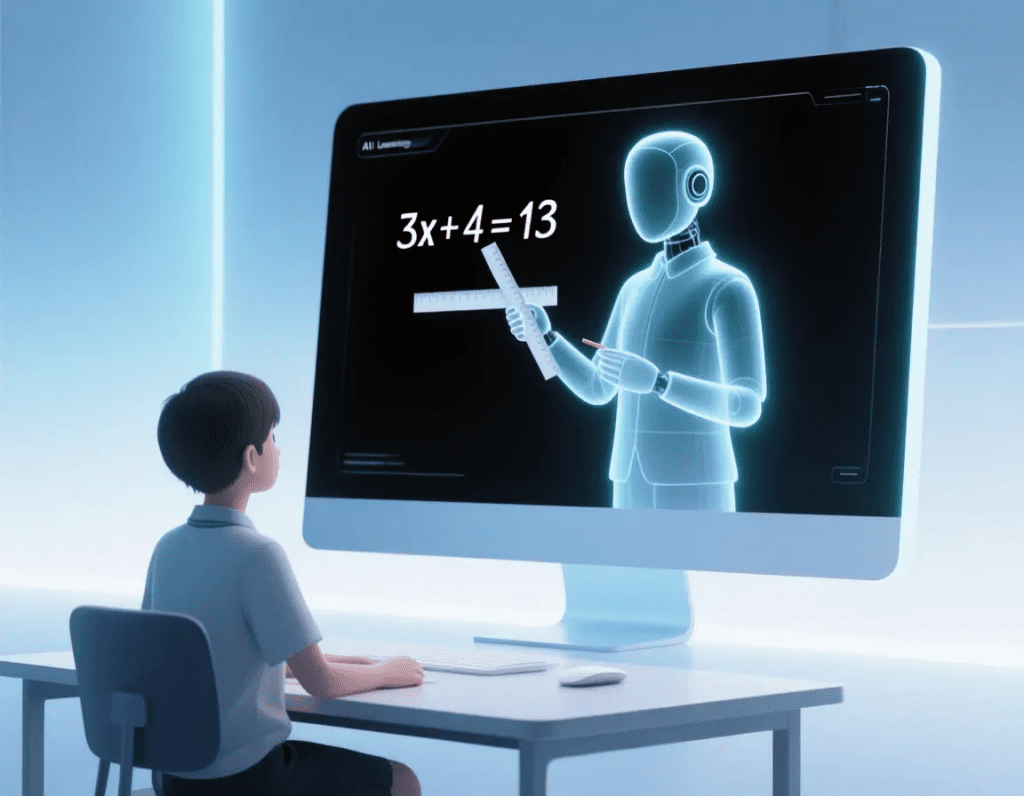
One of the biggest advantages of generative AI is how much it can support academic success. Students can use it to break down difficult topics, get step by step explanations, or explore ideas they might not fully understand in class. This can be especially helpful for those who do not always have access to tutors or extra help outside of school. Innovation Academy senior Hunter Cloutier [12] added, “AI is really helpful to review the concepts I learn in class and it helps me retain what I learn.” When used responsibly, generative AI can build confidence and encourage deeper learning rather than frustration. In fact, according to a 2025 Nature paper, students who utilized AI tutors outperformed their peers with traditional in-class learning. In that sense, generative AI can act as a bridge that makes education more accessible.

At the same time, there are real concerns about its environmental impact. Training and running large AI models in these large data centers requires massive amounts of electricity, which only exacerbates carbon emissions. For instance, data center electricity use in the United States is projected to increase by as large a factor of 3.75 by 2035 according to Global Efficiency Intel. Many systems also rely on water for cooling data centers, leading to significant water consumption that often goes unnoticed. IA sophomore Samanvi Singh [10] notes, “It’s so sad how as a society we’re valuing the work of generative AI over access to clean water for rural communities across America.” As more people rely on these tools, the demand for resources continues to grow. This raises an important issue about whether the benefits to individuals come at a cost to the planet.
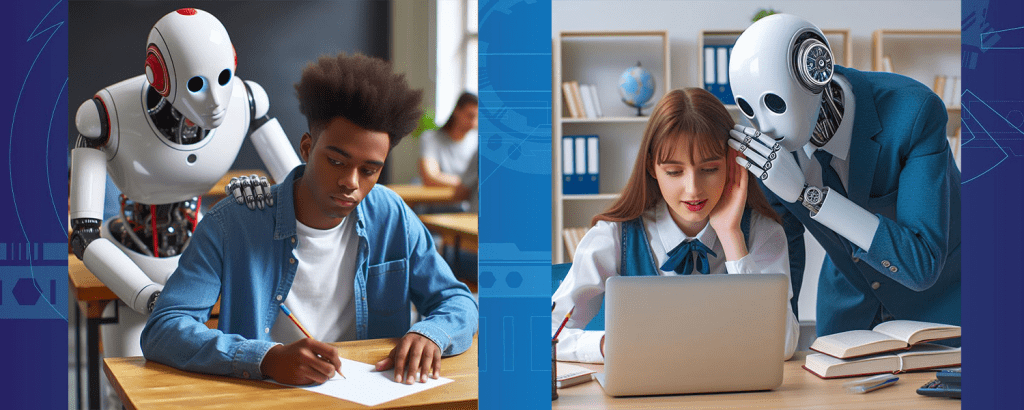
People often have mixed opinions on generative AI, which is especially true amongst students and educators. On one hand, it can inspire creativity by helping people brainstorm ideas or explore new ways of thinking. On the other hand, it can make it easier to avoid doing the actual work, which weakens learning over time. IA senior Talia Astwani [12] echoes this sentiment and reflects, “I’m honestly really conflicted about AI. Yes, AI can and is used to help study and learn concepts, but it also allows for rampant academic dishonesty.” This tension shows that the value of AI often depends on how it is used rather than the tool itself.
These debates have led to ongoing discussions in schools and communities. Teachers are trying to find ways to integrate AI without compromising academic integrity. Some classrooms are encouraging guided use, where students learn how to use AI as a support rather than a replacement. Others are setting stricter boundaries to prevent misuse. The conversation is still evolving, and there is no single solution that works for everyone.
In the end, generative AI is neither completely good nor entirely harmful. It offers powerful opportunities to learn, create, and grow, but it also brings challenges that cannot be ignored. Its true worth depends on balance, responsibility, and awareness of its broader impact. For high school students, the goal should not be to avoid AI or rely on it completely, but to understand it and use it wisely.
link gacor